Kiwi Bird - 3d Papercraft: A Designer's Reality Check
As a designer who spends more time staring at stitch simulations than actual screens, I approach every new machine embroidery design with a healthy dose of skepticism. We've all been there: you download a file that looks adorable in the thumbnail, only to find it's a tangled mess of underlay and poor density once it hits the hoop. So, when I came across the Kiwi Bird - 3d Papercraft, my initial reaction wasn't immediate excitement, but rather a calculated pause. The title suggests a paper modeling project, yet here we are, evaluating it as a potential asset for textile applications. This disconnect is exactly where a professional review needs to start—not with hype, but with practical translation.
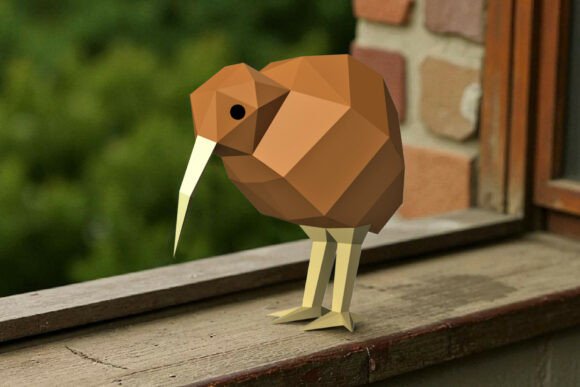
The first impression of this design is its distinct personality. It captures the quirky, flightless charm of the Kiwi, a beloved subject within the Animals category. Visually, the layout feels compact and bold, which is usually a good sign for embroidery. However, because the source material is described as a "3D SVG" intended for assembly with glue and cardstock, the lines are likely optimized for cutting and folding, not necessarily for satin or fill stitches. This is a critical distinction. When I imagine placing this on a custom sweatshirt or a boutique tote bag, I have to mentally convert those vector paths into thread. Would the beak translate well into a dense satin stitch, or would it require a complex appliqué approach to maintain that sharp, geometric look?
Translating Paper Logic to Fabric Reality
Let's walk through a real-world scenario. Imagine a client runs a small shop selling eco-friendly nursery decor. They want a series of personalized gift items featuring native wildlife. The Kiwi Bird - 3d Papercraft seems perfect thematically. But before committing to a production run of fifty pillow covers, I need to consider the mechanics. The product description notes an assembled size of roughly 20 x 14 x 20 CMS for the paper version. In embroidery terms, this gives us a generous canvas, but it also demands attention to stitch density. If we scale this down to fit a standard 4x4 hoop for a baby onesie, those intricate details meant for paper folding might become a bird's nest of thread breaks.
For a custom apparel project, say a heavyweight cotton hoodie, this design could shine if treated as an applique design. Instead of trying to fill every pixel with thread, I would use the digital files (likely the DXF or EPS if available in your package) to cut a fabric shape. This respects the original "papercraft" aesthetic while ensuring the finished product remains soft and wearable. A direct stitch-out on a thin t-shirt might result in excessive puckering, especially given the potentially sharp angles of a 3D-modeled bird. The texture of the fabric plays a huge role here; a linen tea towel might handle the structural lines better than a stretchy jersey knit.
Navigating Technical Constraints and Hoop Sizes
One of the biggest hurdles with designs originating from non-embroidery sources is the lack of predefined hoop size compatibility. The provided details mention PDF, DXF, EPS, PNG, and JPG formats. Noticeably absent is a specific mention of PES, DST, or XXX files, which are standard for most home machines. This tells me that if you are an Etsy seller or a craft business owner, you cannot simply load this onto your machine and hit start. You will likely need to digitize it yourself or hire a digitizer to convert those vector lines into a functional embroidery file.
This step is non-negotiable for maintaining professionalism. If you attempt to print the PNG and transfer it without proper stitching planning, you risk ruining the brand consistency of your handmade products. Furthermore, consider the stabilizer requirements. A design with the structural intent of a 3D model implies rigidity. On fabric, you'll need a cut-away stabilizer for garments that will see frequent washing, like aprons or kitchen towels. Using a tear-away might leave the edges of the Kiwi's feathers fraying after the third wash, leading to customer complaints and returns.
Commercial Viability and Visual Appeal
Does the Kiwi Bird - 3d Papercraft have what it takes to drive sales? Absolutely, but with caveats. The visual appeal is high; the Kiwi is recognizable and endearing. For holiday embroidery projects or seasonal boutique items, this theme works wonderfully. However, the value lies in how you execute it. A poorly stitched version looks amateurish. A well-executed version, perhaps using a mix of running stitch for outlines and textured fill stitches for the body, becomes a premium asset.
When thinking about buyer engagement, remember that customers buy the finished look, not the file format. If you are creating printable mockups for your online store, ensure the colors in your digital preview match the actual thread colors you plan to use. Contrast is key. A dark Kiwi on a black cap will vanish unless you use a light backing or strategic highlighting. Always test your design on scrap fabric that matches your final product. Check the small details—are the eyes too close together? Will the needle punch through the same spot too many times? These are the questions that separate a hobbyist from a pro.
Final Verdict for the Practical Maker
In conclusion, the Kiwi Bird - 3d Papercraft is a fascinating design asset, but it requires a designer's eye to unlock its potential in the world of embroidery. It is not a plug-and-play solution for immediate stitching unless you are prepared to do the heavy lifting of digitization. For those willing to adapt the vectors into a robust stitch file, the rewards are significant. It offers a unique aesthetic that stands out in a sea of generic animal motifs.
Before you list this as a small shop product or use it for a high-stakes client order, verify the licensing terms explicitly. The description mentions "Non," which cuts off, so you must confirm if commercial use is permitted for the physical goods you create. Test the design on various fabric textures, from canvas tote bags to soft flannel baby blankets. Pay attention to how the stitch density affects the drape of the material. If handled with care, this Kiwi can become a signature element of your brand, adding a touch of whimsical nature to your handmade product line. Just remember: in embroidery, as in papercraft, precision is everything.